Intelligent Octopus Go Changes (March 2026): 6-Hour Smart Charging Cap & Charge Cap Explained
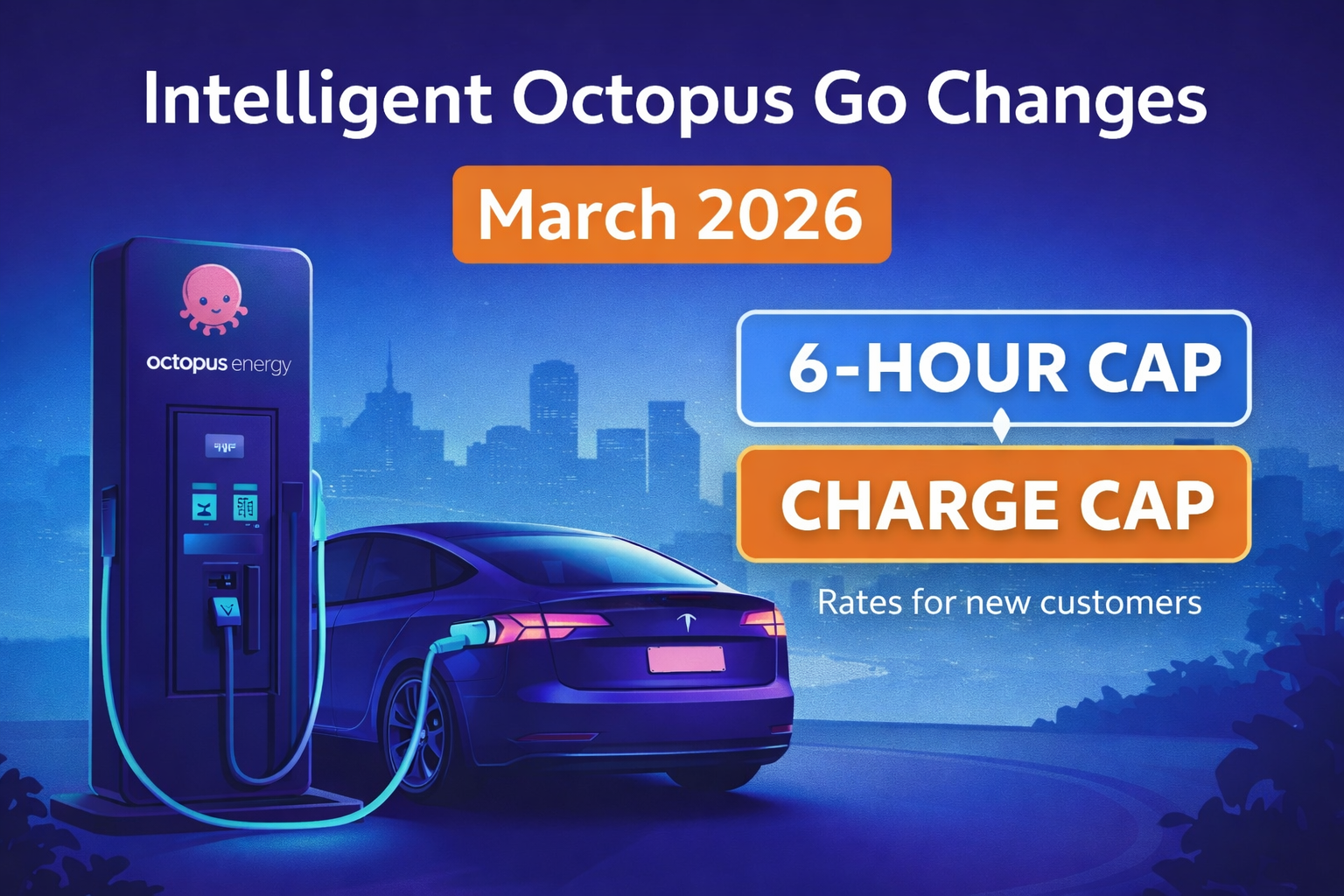
The Intelligent Octopus Go changes planned for March 2026 include a new 6-hour smart charging cap and a new control called Charge Cap. Octopus also says new customers will pay higher prices, while existing customers are being held on current rates (for now). Here’s a plain-English breakdown of what’s changing, who it affects, and what you should do next.
Are Intelligent Octopus Go rates increasing?
Yes — Octopus says it needs to increase prices for new customers joining Intelligent Octopus Go, citing wholesale cost pressure. These Intelligent Octopus Go changes are positioned as a change for new joiners, rather than an immediate blanket increase for everyone already on the tariff.
What happens to existing customers?
The good news: Octopus says it is holding existing customers’ rates for now. They also mention they held off passing on earlier price rises and intend to keep doing so “for as long as we can”.
In plain terms: if you already have Intelligent Octopus Go, you may be protected from these increases for the moment — but keep an eye out for future communications.
What is the new 6-hour smart charging cap?
Octopus previously announced a 6-hour smart charging cap to keep the system fair. This update says it has been delayed while Octopus tests internally, and is now expected to be ready in March 2026 (with notice before it goes live).
What the cap is trying to do
- Encourage charging during the cheapest, lowest-demand hours.
- Reduce demand spikes that can push costs up for everyone.
- Keep the tariff fair for households with different usage patterns.
Who might notice it
- Drivers who often arrive home with a very low battery.
- Higher-mileage drivers needing big overnight top-ups.
- Homes with more than one EV charging overnight.
What is “Charge Cap”?
Octopus says it’s introducing a new option called Charge Cap alongside the 6-hour cap (also expected in March 2026). The idea is to give you control over how smart charging behaves — balancing lowest cost versus hitting your charge target.
Option A: “6 cheapest hours” mode
If you plug in regularly, Octopus says many drivers shouldn’t see a change — charging is capped to the 6 cheapest hours.
- Best for: predictable overnight charging.
- Goal: maximise cheap-rate charging.
Option B: “Hit my charge target” mode
Your car can still reach your target even if it needs some charging outside the 6 cheapest hours — which could cost more on some nights.
- Best for: higher mileage, tighter turnaround.
- Goal: prioritise readiness over the cheapest window.
Will this change your charging costs?
For most people charging overnight, costs may be similar — especially if you choose the “6 cheapest hours” mode and plug in regularly. The main cost risk is when you need more than 6 hours and choose the option that prioritises hitting a charge target.
What should you do next?
1) If you’re already on Intelligent Go
Watch for the March rollout notice. Choose “6 cheapest hours” vs “hit my target” based on your typical overnight needs.
2) If you’re thinking of switching to Intelligent Go
Expect new customer rates to be higher than before. Compare live options first — it may still be great, but it depends on your usage.
3) Compare your real costs
Use our tools to estimate monthly cost based on mileage, off-peak window, and standing charge.
Want to see which EV tariff is cheapest for you?
Compare tariffs by off-peak price, windows and standing charges — then estimate your real monthly charging cost.
Compare EV tariffs →For the latest supplier comparisons, see: Cheapest EV tariffs and the EV tariff comparison table.
FAQ (Intelligent Octopus Go changes)
Are existing Intelligent Octopus Go customers getting a price rise?
Octopus says existing customers’ rates are being held for now. New customers joining Intelligent Go will see higher pricing.
When does the 6-hour smart charging cap start?
Octopus says the cap is delayed while they test internally and they expect it to be ready in March 2026, with notice before it goes live.
What is “Charge Cap” on Intelligent Octopus Go?
A setting that lets you choose between capping charging to the 6 cheapest hours (lowest-cost approach) or prioritising hitting your charge target even if it needs extra charging outside those hours.
Will the 6-hour cap increase my EV charging costs?
Not necessarily. If you plug in regularly and charge overnight, you may stay within the cheapest hours. Costs may rise on nights where you need extra charging outside the cheapest window and you choose to prioritise your target.
Where can I compare Intelligent Go to other EV tariffs?
Use the EV tariff comparison table to compare prices, windows and estimated charging costs.
Tariff terms can change. Always check the supplier’s latest terms and unit rates before switching. This update is based on Octopus’ customer communication and may be refined as new details are published.